






What Happens If You Refuse a Breath Test in Oregon?
If you are stopped on suspicion of DUI in Oregon, you may be asked to take a breath test. In that moment, many people hesitate—or refuse—without fully understanding what that decision means.
Refusing a breath test is not a neutral choice. It carries its own set of consequences that are separate from the DUI charge itself.
Attorney Ethan Meaney has more than 25 years of experience defending DUI and drunk driving charges. He helps clients understand exactly where they stand after a refusal and what options may be available moving forward.
Can You Legally Refuse a Breath Test in Oregon?
Yes—you can refuse a breath test.
But that does not mean there are no consequences.
Oregon operates under an “implied consent” law. By driving on Oregon roads, you have already agreed to submit to chemical testing if an officer has lawful grounds to request it.
A refusal is treated as a violation of that agreement, and it triggers specific penalties—regardless of whether you are ultimately convicted of DUI.
What Happens Immediately After You Refuse?
A refusal typically sets two processes in motion:
- A DMV (administrative) case related to your driving privileges
- A criminal DUI case in court
These are separate proceedings, with different standards, timelines, and consequences.
That distinction matters. What happens in one does not automatically control what happens in the other.
What Are the Consequences of Refusing a Breath Test?
While every situation is different, a refusal can lead to:
- License suspension through the Oregon DMV
- Additional requirements to reinstate your driving privileges
- Use of the refusal as evidence in a DUI case
- Potential complications if you are later considering diversion
The key point is this: refusing a test does not make the situation go away. It changes the landscape of the case.
Will You Automatically Lose Your License for Refusing?
Not automatically—but there are strict timelines.
After a refusal, you typically have a limited window to request a DMV hearing to challenge the suspension. If that deadline is missed, the suspension may go into effect without further review.
These hearings are highly procedural and move quickly. Early action can make a meaningful difference in preserving your options.
Does Refusing a Breath Test Help or Hurt Your Case?
There is no one-size-fits-all answer.
Some people assume that refusing a test will prevent the state from having evidence. Others assume it will automatically make things worse.
The reality is more nuanced.
A refusal changes the type of evidence available in the case. It can remove certain evidence (like a breath test result), but it can also introduce other issues—both in court and with the DMV.
Whether that ultimately helps or hurts depends on the specific facts, including:
- Why you were stopped
- What the officer observed
- Whether field sobriety tests were conducted
- How the arrest was handled
This is where experienced legal analysis matters.
Can the Police Get a Warrant for a Blood Test After a Refusal?
In some situations, yes.
If a breath test is refused, law enforcement may seek a warrant for a blood draw. Whether that happens—and whether it is legally valid—depends on the circumstances and how the process is handled.
Again, the details of what occurred during the stop and arrest are critical
What Should You Do After Refusing a Breath Test?
Time matters.
There are deadlines tied to your driving privileges, and decisions made early in the case can shape what options are available later.
If you have refused a breath test, the most productive next step is to get clear, case-specific information—not guess based on what you’ve heard.
Talk to a Bend DUI Defense Lawyer About Your Situation
Every DUI case is different—and refusal cases can be especially fact-sensitive.
Ethan Meaney has spent more than 25 years defending DUI and drunk driving cases. He takes the time to understand what actually happened, explain how the law applies, and help you make informed decisions about what comes next.
If you have refused a breath test, reach out to discuss your situation. A short conversation can give you a much clearer picture of where you stand and what options may be available.
There isn’t a one-size-fits-all answer. Refusing a breath test creates a different set of consequences than taking one. It may limit certain evidence, but it also triggers penalties and can be used against you in other ways. Whether it helps or hurts depends entirely on the facts of your case.
A refusal can result in a license suspension through the DMV, separate from any consequences in a DUI case. There may also be requirements that must be met before driving privileges can be reinstated. The exact impact depends on your record and the circumstances surrounding the stop.
The length of a suspension can vary based on whether there have been prior incidents and other factors in your driving history. There are also strict deadlines to request a DMV hearing to challenge the suspension. Missing those deadlines can result in a suspension going into effect automatically.
Yes, but timing is critical. After a refusal, you typically have a limited number of days to request a DMV hearing. At that hearing, certain issues—such as whether the officer had lawful grounds—can be challenged. These hearings move quickly and are very technical.
Yes. A refusal can be introduced as evidence in a DUI case. The way it is used—and how much weight it carries—depends on the specific facts and how the case is handled.
In some cases, law enforcement may seek a warrant for a blood draw after a refusal. Whether that happens, and whether it was done properly, depends on the circumstances. These issues can become important in evaluating the strength of the case.
No. You can still be arrested and charged with DUI even if you refuse a breath test. The case may rely on other forms of evidence, such as officer observations or field sobriety tests.
If you want to understand your options clearly, yes. Refusal cases often involve both DMV and court proceedings, each with their own rules and deadlines. Speaking with an experienced DUI defense lawyer can help you understand what applies to your situation and what steps may make sense moving forward.
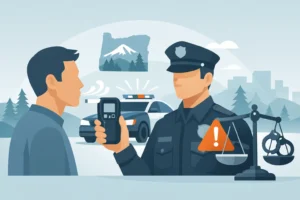
Breath Test Refusal Penalties in Oregon
Breath test refusal penalties in Oregon can trigger license suspension fast. Learn the DMV and court risks, deadlines, and defense issues.
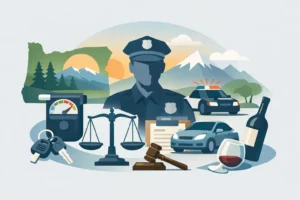
Oregon Implied Consent Law DUI Explained
Oregon implied consent law DUI rules can trigger license suspension fast. Learn what refusal means, deadlines, and defense issues after arrest.
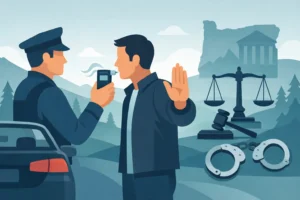
Breath Test Refusal Oregon Penalties
Breath test refusal Oregon penalties can mean license suspension, fines, and defense issues. Learn what happens fast and what steps matter now.